Group vs Private Swimming Lessons for Kids: Which Option Fits Your Child Best?
Swimming is one of the most valuable life skills a child can learn. Beyond water safety, swimming helps children develop confidence, coordination, discipline, and physical fitness that can benefit them for years to come.
However, one of the most common questions parents face is whether group swimming lessons or private swimming lessons are the better choice.
Both options offer unique advantages, and the right decision often depends on your child’s personality, learning style, confidence level, and goals.
In this guide, we’ll explore the differences between group and private swimming lessons to help you determine which option best supports your child’s development.
Understanding the Two Types of Swimming Lessons
Before comparing the benefits, it’s important to understand how each lesson format works.
What Are Group Swimming Lessons?
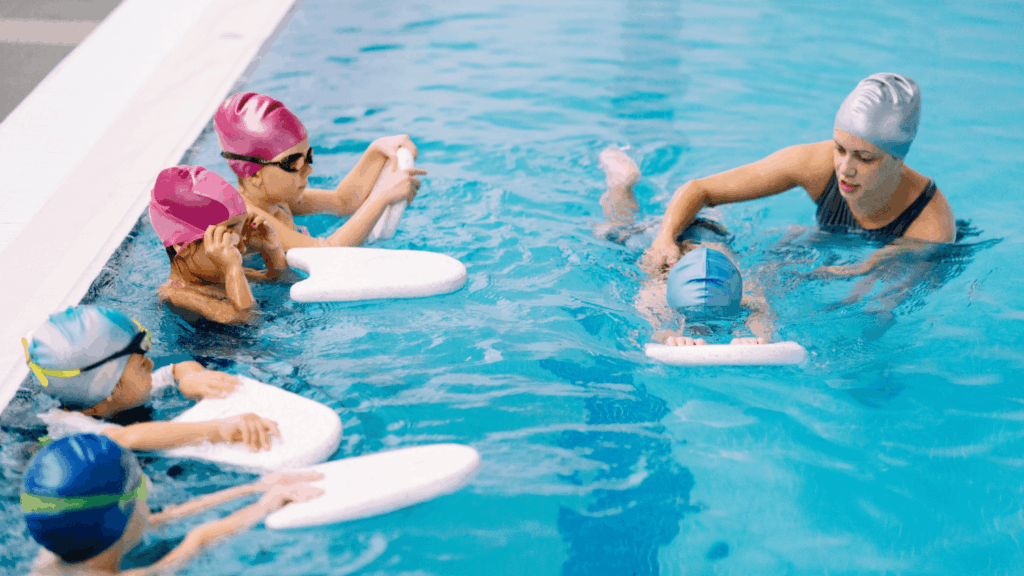
Group swimming lessons involve multiple children learning together under the guidance of a qualified instructor.
Most swim schools organise classes according to age and ability level, allowing children to progress through a structured programme with peers who have similar skills.
At swim schools, group lessons are designed to provide a balance of skill development, water safety education, and confidence building within a supportive environment.
What Are Private Swimming Lessons?
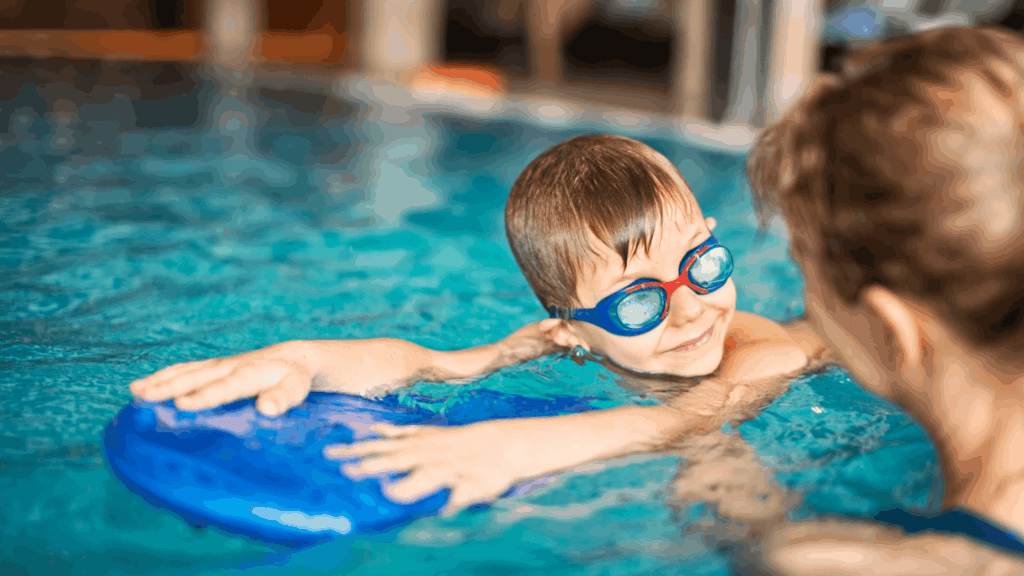
Private swimming lessons provide one-to-one instruction between the child and coach.
The entire lesson is tailored to the individual swimmer’s needs, allowing instructors to focus on specific skills, challenges, or goals.
Private lessons typically offer greater flexibility in teaching pace and lesson content compared to group classes.
Benefits of Group Swimming Lessons
Group lessons remain the most popular option for many families, and for good reason.
Encourages Social Development
Children naturally learn from one another.
In a group environment, they have opportunities to interact with peers, practise listening skills, and develop confidence in social situations.
Swimming lessons can become a fun and enjoyable activity where children form friendships while learning valuable water skills.
For younger swimmers especially, seeing other children participate can help reduce anxiety and create a more comfortable learning experience.
Builds Confidence Through Peer Learning
Children often gain confidence when they observe others mastering new skills.
Watching classmates successfully float, kick, or swim a short distance can motivate hesitant swimmers to try the same activities themselves.
This type of positive peer influence is difficult to replicate in a private lesson setting.
More Cost-Effective
One of the main advantages of group lessons is affordability.
Because the instructor’s time is shared among several students, group classes typically cost less than private sessions.
This allows families to maintain consistent lessons over a longer period, which is often more important for swimming progress than occasional intensive instruction.
Supports Long-Term Progression
Structured group programmes often follow carefully designed development pathways.
Children gradually progress through different skill levels while building water confidence and swimming competence step by step.
For many beginner and intermediate swimmers, this approach provides everything needed to develop strong foundational skills.
Benefits of Private Swimming Lessons
While group lessons suit many children, private instruction offers unique benefits that can be highly effective in certain situations.
Individualised Attention
The most obvious advantage of private lessons is personalised coaching.
The instructor can focus entirely on your child throughout the session, providing immediate feedback and targeted corrections.
This level of individual attention can help address specific technical issues more efficiently.
Faster Skill Development
Because there are no other students competing for the instructor’s attention, private lessons often allow for quicker progression.
Children receive constant guidance, which can help reinforce correct techniques and reduce the development of poor habits.
This can be particularly useful for children preparing for swimming assessments or specific aquatic goals.
Ideal for Nervous Swimmers
Some children feel overwhelmed in group environments.
A private lesson provides a quieter and less distracting setting where nervous swimmers can build trust with their instructor and develop confidence at their own pace.
Children who have a fear of water may benefit significantly from this personalised approach.
Suitable for Advanced Goals
Private coaching can also support advanced swimmers looking to refine specific skills.
Whether working on stroke technique, breathing patterns, turns, or race preparation, individual coaching allows for detailed technical instruction.
Factors Parents Should Consider Before Choosing
The best lesson format depends on your child’s unique needs.
Your Child’s Personality
Children who enjoy social interaction often thrive in group lessons.
They may find motivation through teamwork, shared experiences, and friendly competition.
On the other hand, children who are naturally reserved or easily distracted may benefit from the focused environment of private instruction.
Current Swimming Ability
Beginners often do well in group programmes where they can learn alongside peers at a similar stage.
Children with significant fears, learning challenges, or specific skill gaps may benefit from private lessons initially before transitioning into group classes.
Learning Style
Some children learn effectively by observing others.
These swimmers often enjoy group settings where demonstrations and peer examples support learning.
Others require repeated individual guidance and may progress more comfortably in private lessons.
Budget and Scheduling
Private lessons generally involve a higher financial commitment.
Parents should consider not only the cost but also lesson frequency and long-term consistency.
In many cases, attending regular group lessons provides excellent value while supporting steady development.
Group vs Private Swimming Lessons: A Comparison
Factor | Group Lessons | Private Lessons |
Personal Attention | Moderate | High |
Social Interaction | Excellent | Limited |
Cost | More affordable | Higher cost |
Learning Pace | Structured | Customised |
Confidence Building | Peer support | Individual support |
Flexibility | Fixed schedules | More flexible |
Suitability for Beginners | Excellent | Excellent |
Advanced Skill Development | Good | Excellent |
Neither option is universally better.
The best choice depends on your child’s needs and learning preferences.
When Group Lessons May Be the Better Choice
Group swimming lessons are often ideal when:
- Your child enjoys learning with others.
- Social interaction motivates them.
- They are comfortable in structured environments.
- You want a long-term progression pathway.
- Budget is an important consideration.
Many children gain valuable life skills through group learning, including patience, teamwork, and communication.
When Private Lessons May Be the Better Choice
Private swimming lessons may be beneficial if:
- Your child has a fear of water.
- They require additional confidence building.
- They need focused attention on specific skills.
- They are preparing for assessments or competitions.
- Their learning style benefits from one-to-one coaching.
For some children, private instruction can accelerate early progress and build a stronger foundation before entering group programmes.
Can Children Benefit from Both?
Absolutely.
Many swimming experts recommend a hybrid approach in certain situations.
For example, a child may attend regular group lessons while taking occasional private sessions to address specific technical areas.
This combination allows swimmers to enjoy the social benefits of group learning while receiving personalised coaching when needed.
At Ace Swim Club, families often explore different training options as their children’s needs evolve over time.
Swimming development is rarely one-size-fits-all, and flexibility can help ensure each child receives the support they need.
Finding the Right Swimming Programme
Regardless of whether you choose group or private lessons, the quality of instruction matters most.
Look for programmes that offer:
- Qualified and experienced instructors
- Structured skill progression
- Strong emphasis on water safety
- Positive learning environments
- Clear communication with parents
A well-designed programme should help children build confidence while developing the technical skills needed to become safe and competent swimmers.
If you’re unsure which lesson format is best for your child, speaking with experienced coaches can help you make a more informed decision.
You can contact the team to discuss your child’s goals, current ability level, and recommended learning pathway.
Conclusion
When comparing group and private swimming lessons, there is no single right answer.
Group lessons provide social interaction, affordability, and structured progression. Private lessons offer personalised coaching, flexibility, and focused skill development.
The best option depends on your child’s personality, confidence level, learning style, and swimming goals.
By choosing a programme that aligns with their individual needs, you can help your child build strong swimming skills, develop confidence in the water, and enjoy a positive learning experience that lasts for years to come.
FAQs
Are private swimming lessons better than group lessons for children?
Not necessarily. Private lessons offer personalised coaching, while group lessons provide social interaction and structured progression. The best choice depends on the child’s needs and learning style.
At what age should a child start group swimming lessons?
Many swim schools offer group lessons from an early age. The ideal starting age depends on the child’s confidence, maturity, and readiness to participate in a group environment.
How many children are usually in a group swimming class?
Class sizes vary between swim schools, but most quality programmes maintain manageable instructor-to-student ratios to ensure safety and effective learning.
Do private swimming lessons help children learn faster?
Private lessons can accelerate learning because instructors provide continuous feedback and personalised attention throughout the session.
Can my child take both group and private swimming lessons?
Yes. Many swimmers combine group and private lessons to benefit from both peer learning and individual coaching.