
The Basic Skills in Swimming, and the Order Good Coaches Teach Them In
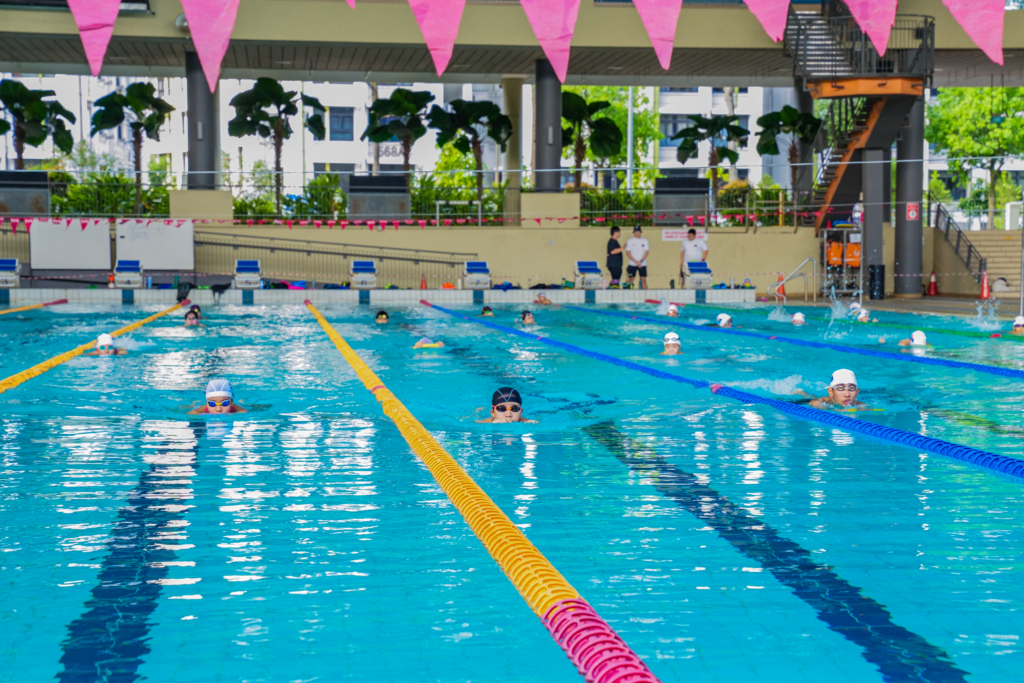
The basic skills in swimming are a specific, deliberately ordered sequence, water comfort, breath control, floating, gliding, kicking and finally arm coordination, and each one builds directly on the one before it. Parents and adult beginners alike often ask why a coach spends so long on what looks like “just floating” before any actual stroke work begins. The honest answer is that skipping ahead does not save time, it creates gaps that show up later as bad habits.
Why the Order Matters More Than the Pace
A swimmer who is pushed into stroke drills before their body position is stable will almost always compensate somewhere, usually by lifting their head too high, dropping their hips, or kicking from the knee instead of the hip. These compensations get the swimmer moving forward in the short term, which can look like progress. In reality they become habits that are far harder to unlearn later than they would have been to prevent from the start. You can see our full range of swimming programmes
Good coaches resist the temptation to rush a swimmer toward a recognisable stroke, because a shaky stroke built on a weak foundation is slower to fix than a slightly longer wait for a solid one. This is the reasoning behind almost every decision in the sequence below.
Skill 1: Water Comfort
Before anything technical, a swimmer needs to be genuinely relaxed with water on their face, in their ears, and around their shoulders. This sounds basic, but a tense swimmer holds their breath, tightens their shoulders, and fights the water rather than moving through it. Coaches spend real time here, through games, gentle submersion and simple play, because every later skill depends on the swimmer’s body staying loose rather than braced.
Skill 2: Breath Control
Once a swimmer is comfortable, breath control comes next, specifically exhaling through the nose or mouth while the face is submerged. This is taught before floating or kicking because a swimmer who instinctively holds their breath underwater will fight to lift their head at exactly the moments a proper stroke needs it lowered. Getting breath control right early removes a problem that would otherwise resurface in every stroke taught afterward.
Skill 3: Floating
Floating, both on the front and the back, teaches a swimmer how their own body sits in water without active effort. This matters because every stroke is really a controlled disruption of a stable float, not a fight against sinking. A swimmer who has never felt a genuine float tends to swim with their legs low and dragging, because they have never experienced what a balanced body position actually feels like.
Skill 4: Gliding
Gliding adds forward motion to the float, usually pushed off from the wall or a coach’s hands, with the body held long and streamlined. This is the skill that teaches a swimmer to move efficiently through water rather than thrashing against it. It also quietly builds the body-line habit that every competitive stroke technique is eventually built on top of.
Skill 5: Kicking
Kicking is introduced once a swimmer can glide with a stable body position, using a kickboard so the legs can be isolated and drilled without the added coordination demand of the arms.
Kicking from the hip rather than the knee is the specific habit coaches are watching for at this stage, because a knee-driven kick creates drag and rarely self-corrects once it becomes automatic.
Skill 6: Arm Coordination and the First Stroke
Only once the first five skills are solid does arm coordination get introduced, and it is layered on gradually rather than all at once. A swimmer will typically practise arm movement on dry land or standing in shallow water first, then combine it with kicking over a short distance, and only then attempt to coordinate arms, legs and breathing together in a single stroke.
Freestyle is usually the first full stroke taught, because its coordination pattern builds most directly on the breath control and kicking already learned. Backstroke and breaststroke typically follow once freestyle is reasonably stable, since each one reinforces a different piece of body control the swimmer has already started to build.
A Few Signs a Swimmer Is Ready to Move Forward
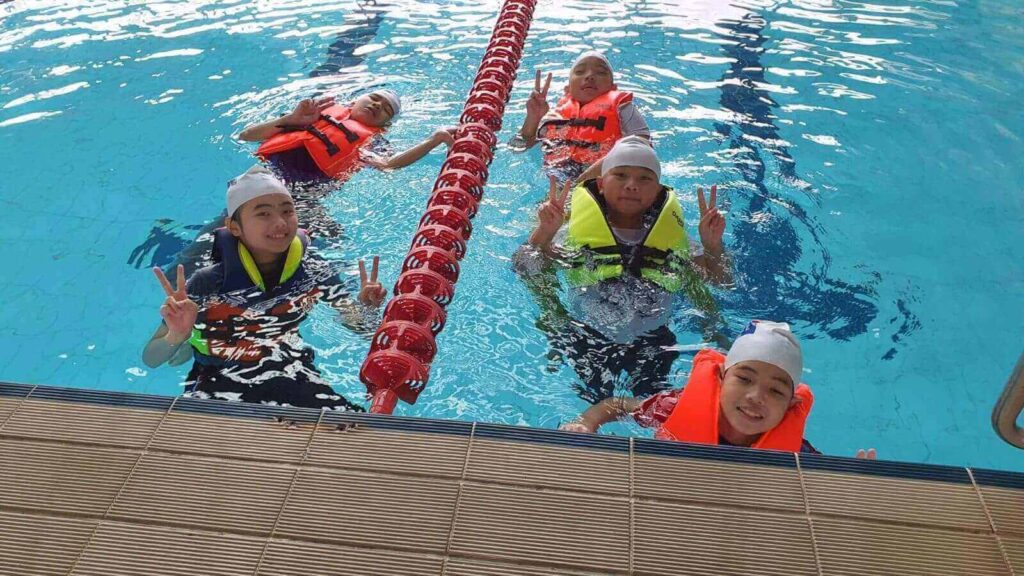
Coaches generally look for a small set of consistent signs before advancing a swimmer to the next skill in the sequence, rather than working to a fixed calendar. None of these signs are about speed, they are about whether the current skill has genuinely settled.
- The swimmer can hold the current skill without visible tension in the shoulders or neck.
- The skill holds up over a full session, not just for one good attempt.
- The swimmer can repeat the skill after a short break, showing it has genuinely settled rather than being a lucky run.
- There is no obvious compensation happening, such as lifting the head to breathe instead of rotating it.
What This Means If Your Child, or You, Feels “Behind”
Every swimmer moves through this sequence at a different pace, and a swimmer who spends longer on water comfort or floating is not behind, they are being taught properly rather than rushed. Our own Learn to Swim programme follows exactly this sequence, with progression based on coach assessment of each swimmer’s readiness rather than a fixed weekly schedule, so nobody is pushed into stroke work before the foundation underneath it is solid.
If you are an adult beginner working through this same sequence for the first time, our companion guide on adult swimming lessons in Singapore walks through what the first month of exactly this progression feels like from a beginner’s perspective. It covers the same six skills above, just from the point of view of someone experiencing them for the first time as a grown adult rather than as a child.
Where to Start
Understanding the sequence does not replace working through it with a coach who can genuinely assess your, or your child’s, readiness at each stage. Get in touch directly through our Contact page to ask which stage would be the right starting point for you or your child.