
What a Competitive Swimming Season Looks Like in Singapore: Training Weeks, Meets, and Qualifying
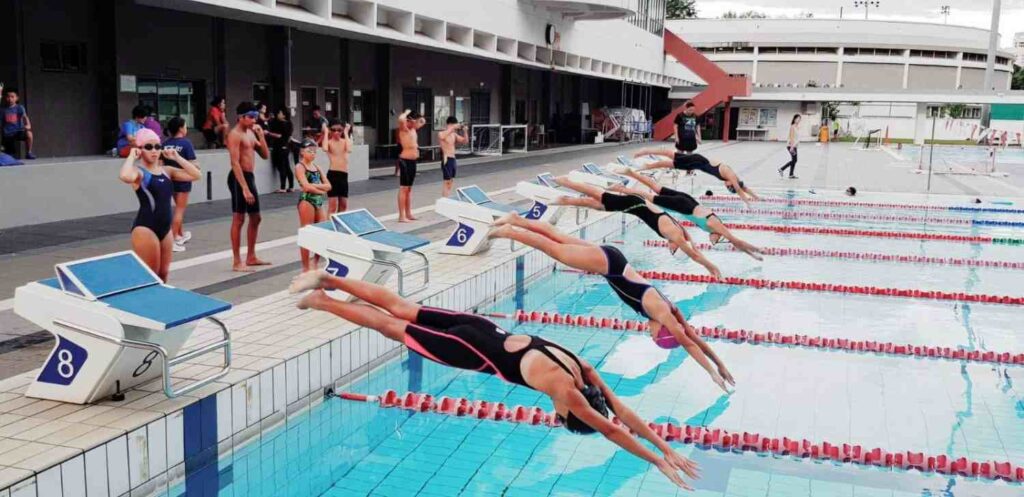
Parents searching for competitive swimming training in Singapore are usually past the question of whether their child can swim, and into a different one: what does joining a squad actually commit us to? A training season is not just more laps than a learn to swim class. It has a shape, a rhythm of building and peaking, a ladder of meets running from a club time trial through to a national championship, and a set of age bands that decide who your child is actually racing against. This guide walks through that shape, so a first season feels like a plan rather than a mystery, drawing on how competitive training is structured in Ace Swim Club’s Competitive Squad programme in Woodlands.
Singapore’s Competitive Swimming Structure
Competitive swimming in Singapore is governed by Singapore Aquatics, formerly known as the Singapore Swimming Association, which sets qualifying times and organises the national championships that most competitive swimmers are ultimately working towards. Understanding that structure from the outset makes the rest of a season, the training, the meets, the age bands, much easier to place in context.
How a Training Season Is Actually Structured
Weekly Training Volume
Training volume in a competitive squad is noticeably higher than a learn to swim class, though it varies by squad level. Depending on the squad a swimmer is placed in, most competitive squads train around four to six sessions a week, typically weekday evenings and Saturday mornings, with each session running roughly two to two and a half hours. Placement is by coach assessment rather than age alone, so a swimmer moves up when their technique and endurance are genuinely ready for it, not on a fixed timeline.
Periodisation: Building, Peaking, and Recovery
A well run competitive season is not the same intensity from January to December. Coaches structure training in blocks, sometimes called periodisation, that move a swimmer through a base building phase, where the emphasis is on endurance and technique, into race pace and speed work as a target meet approaches, and finally into a taper, where training volume drops so a swimmer arrives at their goal meet rested rather than fatigued. Recovery weeks are built into this cycle deliberately. A season that looks like it is slowing down at certain points is usually working exactly as intended.
The Meet Ladder: From Club Time Trials to National Competition
Club Meets and Time Trials
For almost every swimmer, the first race experience is a club meet or an internal time trial rather than a national event. These lower pressure settings let a swimmer practise starts, turns, and race pacing in front of an audience, without the scale of a full competition. They are also how coaches gather the times needed to plan the season ahead.
Singapore National Age Group Championships and Junior Inter Club
From club level, swimmers who are ready progress towards the Singapore National Age Group Championships and Junior Inter Club meets, the next rungs on the ladder, where qualifying times set by Singapore Aquatics start to matter. Not every swimmer reaches this stage in their first season, and that is entirely normal; the club meet stage exists precisely to build towards it at a sustainable pace.
School Swimmers and the National School Games
For swimmers who also compete for their school, the National School Games sits alongside the club pathway as a separate but complementary competition track, with its own selection process run through each school.
How Age Bands Work
Competition in Singapore is organised into standard age bands, typically:
- 8 and under;
- 9 to 10;
- 11 to 12;
- 13 to 14;
- 15 to 17;
- Open.
Within each band, races are further separated by stroke and distance, so a swimmer is always racing others at a broadly comparable stage of physical development, not simply the same calendar age regardless of when their birthday falls in the competition year.
What a First Season Realistically Looks Like
Not every swimmer follows the same timeline into competitive swimming, and there is no single correct age to start. Some swimmers move from learn to swim classes into a squad in primary school; others do not join a competitive squad until their teenage years and still go on to compete strongly at national level. What matters more than starting age is a genuine foundation in all four strokes, Freestyle, Backstroke, Breaststroke, and Butterfly, and the endurance to sustain a full training week, both of which a coach will assess individually rather than assume from age alone.
We do not promise a fixed result or a fixed timeline for any swimmer; progress in competitive swimming depends on the individual, and any coach who guarantees a specific outcome or qualifying time by a specific date should be treated with caution.
The Coaches Behind the Programme
A season’s structure only works if the coaching behind it has real depth. Our Competitive Squad programme is led by a team with genuine national and international competition backgrounds.
- Eugene Chia – Head Coach & Elite A Squad Coach. 20+ years across various swim clubs, the Singapore Swimming Association, and Singapore Sports School; coached swimmers to national/regional records and Asian Games/Olympic qualification.
- Crystal Wang – Advanced Squad Coach. 24+ years; mentored medallists and record holders at the National School Games and Singapore National Age Group Swimming.
- Jeremy Kevin Mathews – Development and Competitive Section Head. Former competitive swimmer, ex-national record holder, SEA Games gold medallist.
- Arthur Chan, Ethan Chan, Yang Bin – round out the team, with combined experience across Singapore, Malaysia, and international sports science.
This depth of experience is what shapes the periodisation, the pacing, and the honest, individual assessment behind every swimmer’s season.
Frequently Asked Questions
What age can my child join the Competitive Squad?
There is no fixed age. Your child needs a reasonable foundation in all four strokes, usually built through our Learn to Swim programme, and final placement is always by coach assessment.
How many days a week is competitive training?
Most squads train around four to six sessions a week, depending on the squad level, typically weekday evenings and Saturday mornings.
Does my child have to compete once they join a squad?
Competition is part of squad training, but the pace at which a swimmer starts racing is discussed individually with the coach. Club meets and time trials are the usual first step, not a national meet.
What organisation runs competitive swimming in Singapore?
Singapore Aquatics, formerly the Singapore Swimming Association, sets qualifying times and organises the national championships.
How are age groups decided in competition?
Standard age bands are used, 8 and under, 9 to 10, 11 to 12, 13 to 14, 15 to 17, and Open, further separated by stroke and distance.
Can you guarantee my child will reach national level?
No, and any programme that promises a specific outcome or a specific qualifying time by a specific date should be treated with caution. Progress depends on the individual swimmer, and our coaches assess and plan accordingly rather than guarantee a result.
Where is competitive squad training held?
At the Singapore Sports School Competition Pool, 1 Champions Way, Singapore 737913, in Woodlands.